Square Foot Gardening for Beginners: A Modern Approach
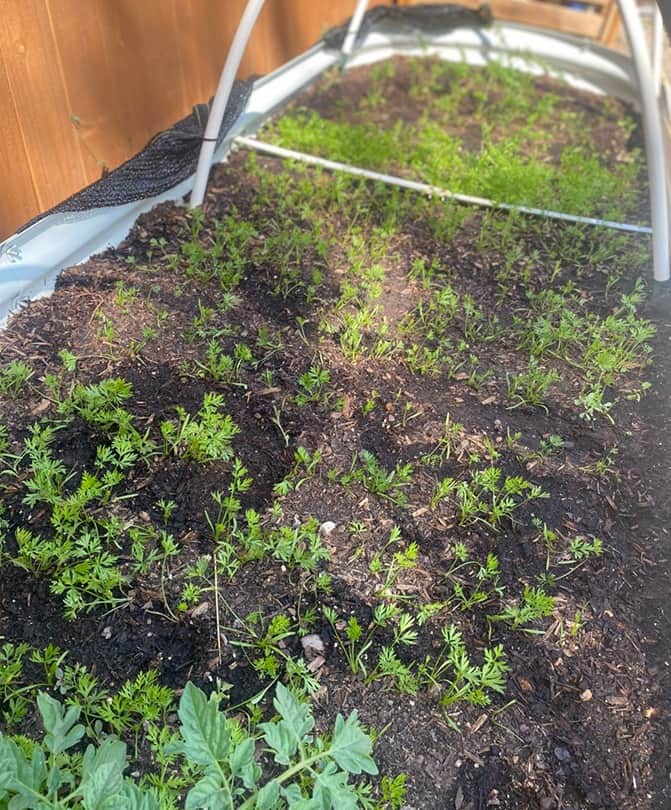
Planning your first vegetable garden can feel overwhelming. How much space do you need? How many tomato plants should you grow? Can you fit multiple large plants in the same bed?
Square foot gardening answers these questions with a simple framework: divide your growing space into one-foot sections and plant based on each vegetable's mature size. It's not about following rigid rules, it's about having a clear system that helps you make smart decisions.
By the end of this guide, you'll know exactly how to plan a productive garden in whatever space you have available.
What Is Square Foot Gardening?
Square foot gardening was developed by Mel Bartholomew in the 1980s. Bartholomew, a retired engineer, wanted a simpler way to garden. Traditional row gardening felt inefficient — lots of wasted space, constant weeding, excessive water use. His solution: divide growing areas into one-foot squares and plant intensively based on plant size.
The concept is straightforward. Instead of planting in long rows, you create a grid of one-foot squares. Large plants like tomatoes get one square. Medium plants like lettuce get four per square foot. Small plants like radishes get sixteen per square foot.
This structure gives you a visual framework for planning. No guessing, no wasted space.
The Benefits of Square Foot Gardening
You fit more into the space you have. Traditional row gardening leaves wide paths between rows for walking and equipment. Square foot gardening uses space more intentionally — you plant densely within beds and only create paths where you actually need access. The result: you grow significantly more food in the same footprint.
You use water more efficiently. Dense planting creates a canopy that shades the soil, reducing evaporation. You'll water less frequently than you would with bare soil between rows. Less water waste, lower bills.
Larger plants naturally shade heat-sensitive crops. Tall plants like tomatoes provide afternoon shade for lettuce and spinach during hot months. This extends your harvest season for cool-season greens that would otherwise bolt in the heat.
Your soil develops more microbial activity. Concentrated organic matter and closer root systems create ideal conditions for beneficial soil microorganisms. These microbes break down nutrients, suppress diseases, and improve soil structure. Healthier soil means healthier plants with less fertilizer input. Want to learn more about improving your soil? Check out our guide to building healthy garden soil.
Setting Up Your Square Foot Garden
Square foot gardening traditionally uses raised beds — typically 4 feet wide so you can comfortably reach the center from any side without stepping in. Raised beds give you better drainage, easier access (less bending), and complete control over your soil quality.
You can adapt the principles to in-ground beds, but raised beds are where the method really shines. They prevent soil compaction (since you never walk on them), warm up faster in spring, and make it easy to build great soil from scratch if your native soil is problematic.
Standard dimensions: 4 feet wide (you can reach 2 feet from either side), any length that fits your space, and 6-12 inches deep. Materials can be untreated wood, composite boards, concrete blocks, or galvanized steel.
Soil Matters
You need soil that drains well and has decent organic matter. Don't have great soil? That's fixable. (See our full guide to understanding and improving garden soil for details on working with clay, sand, or loam.)
The most important thing: good compost. Work in 2-4 inches of finished compost before planting. This improves drainage in clay soils and water retention in sandy soils.
Mel Bartholomew promoted a specific mix called "Mel's Mix" — equal parts peat moss, vermiculite, and blended compost. It works, but it's not required. I don't use Mel's Mix and still get excellent results. Check out your local garden centers or landfill to see if they sell bulk soil. It's much cheaper than filling beds with bagged soil. Focus on incorporating quality compost and ensuring good drainage. Your soil doesn't need to be perfect, it just needs to be functional.
Spacing Guide: What Fits in One Square Foot?
Here's how many plants fit in each square foot based on mature size:
1 plant per square foot:
- Tomatoes
- Peppers (bell and hot)
- Eggplant
- Cabbage
- Broccoli
- Cauliflower
4 plants per square foot:
- Lettuce (all types)
- Swiss chard
- Kale
- Basil
- Marigolds
9 plants per square foot:
- Spinach
- Beets
- Bush beans
- Peas
16 plants per square foot:
- Radishes
- Carrots
- Onions (from sets or transplants)
- Garlic
Download Your Free Vegetable Planting Guide
Get instant access to planting data for 65 vegetables, herbs, and flowers — spacing, timing, sowing depth, and start method for every crop.
We respect your inbox. Unsubscribe anytime.
Example Combinations
One corner square: 1 tomato plant with 4 basil plants tucked around the base. The basil fills empty space while the tomato establishes.
Edge squares for succession planting: 16 radishes in early spring (they mature in 25-30 days), then replant the same square with 4 lettuce plants for summer harvest.
Three connected squares: 1 cucumber on a trellis in the center square, 9 bush beans in each flanking square. The beans fix nitrogen that benefits the cucumber.
Use Vertical Space—This Changes Everything
If you want to maximize your garden, grow up, not just out. Trellises are one of the most valuable tools for small-space gardening, and they work with way more than just cucumbers.
Any vining plant can be trellised: tomatoes, squash, cucumbers, pole beans, peas, even melons with proper support. When you train plants vertically, you free up massive amounts of ground space for other crops.
Here's the real magic: trellised plants only occupy their base square footage. A squash plant might sprawl across 15-20 square feet if left on the ground. Put it on a trellis and the plant grows 6-8 feet tall while the base takes up just one square foot of ground space. That means you have most of that square, and the surrounding squares, available for underplanting.
I use cattle panel trellises for most of my vining crops. They're cheap, last for decades, and support heavy crops without sagging. When I trellis my tomatoes and squash and prune the lower branches, I get usable planting space underneath and around the base. I grow lettuce, herbs, radishes, and spinach in the shade beneath my trellised plants. Those crops would have nowhere to go in a traditional sprawling garden layout.
What works well under trellised plants:
- Lettuce and other salad greens (tolerate partial shade)
- Herbs like cilantro and parsley (actually prefer some afternoon shade)
- Radishes (fast-maturing, shade-tolerant)
- Spinach and arugula (bolt less in shade)
Vertical growing also improves airflow around plants, which reduces fungal diseases. Fruit stays cleaner and is easier to harvest. And you dramatically increase production per square foot.
If you're serious about maximizing space, invest in sturdy trellises. The return on investment is huge.
You Don't Need Perfect Squares
I have oval beds, round beds, and irregular-shaped beds. Square foot gardening principles work with all of them.
The method isn't about creating a perfect grid. It's about maximizing space and grouping plants by their mature size. An oval bed still gets mentally divided into rough one-foot sections. A round bed still follows the same spacing guidelines.
What matters is the principle: plant intensively, minimize wasted space, group compatible crops together. The physical shape of your beds is secondary.
Breaking the Rules (When and How)
Strict square foot gardening says one large plant per square foot. In practice, some plants benefit from adjustments.
Tomatoes: I give mine two square feet of ground space, even when trellised. Why? It reduces my maintenance time—less pruning needed, easier harvest access, lower disease pressure. Could you squeeze them into one square foot? Sure. If you're willing to prune regularly and monitor closely for disease, one square foot can work. I prefer the breathing room.
Squash on trellises: With proper vertical support, squash only needs one square foot of ground space. The plant grows upward, and you utilize the ground beneath it for shade-tolerant crops.
Vining plants in general: Whether it's cucumbers, pole beans, or peas, trellising means they take minimal ground space. Train them up and plant underneath.
The key is understanding why you're adjusting. Don't overcrowd plants just to fit more in. Crowded plants compete for nutrients, trap moisture (which invites disease), and can produce smaller yields. Give plants the space they need to thrive, even if that means bending the standard spacing guidelines.
Getting Started
Square foot gardening gives you structure without rigidity. You get a clear framework for planning, efficiency in water and space use, and flexibility to adapt to your specific garden.
Here's how to start:
- Build or buy a raised bed. Even a single 4x4 bed will surprise you with how much it produces.
- Fill it with quality soil. Compost-rich, well-draining. You're creating an ideal growing environment from scratch.
- Sketch your grid. Graph paper works, or use a digital tool. Divide your bed into one-foot squares.
- Choose 4-6 crops for your first season. Don't try to grow everything. Pick what you actually eat regularly.
- Assign plants to squares based on mature size. Use the spacing guide above as a reference.
- Plan for succession planting. Fast-maturing crops like radishes and lettuce can be replanted every 2-3 weeks for continuous harvest.
Want to visualize your layout digitally? Giddy Carrot's free garden planning tool lets you create beds, assign plants based on square footage, and track your planting schedule. It takes the guesswork out of spacing and timing.
Square foot gardening isn't about perfection. It's about having a system that makes planning easier and growing more productive. Start simple, adjust as you learn, and enjoy the process.
Related Articles
Why Your Vegetable Varieties Matter More Than You Think
Choosing the wrong tomato variety cost me two seasons of early disease. One onion mistake meant no bulbs — ever. Here's what I learned about matching varieties to your climate.
Companion Planting: What the Science Actually Says (And What You Can Stop Worrying About)
Most companion planting lists were never scientifically tested. Here's what research actually supports — and why one simple change made the biggest difference in my garden.
I Built the Garden Planning App I Couldn't Find Anywhere Else
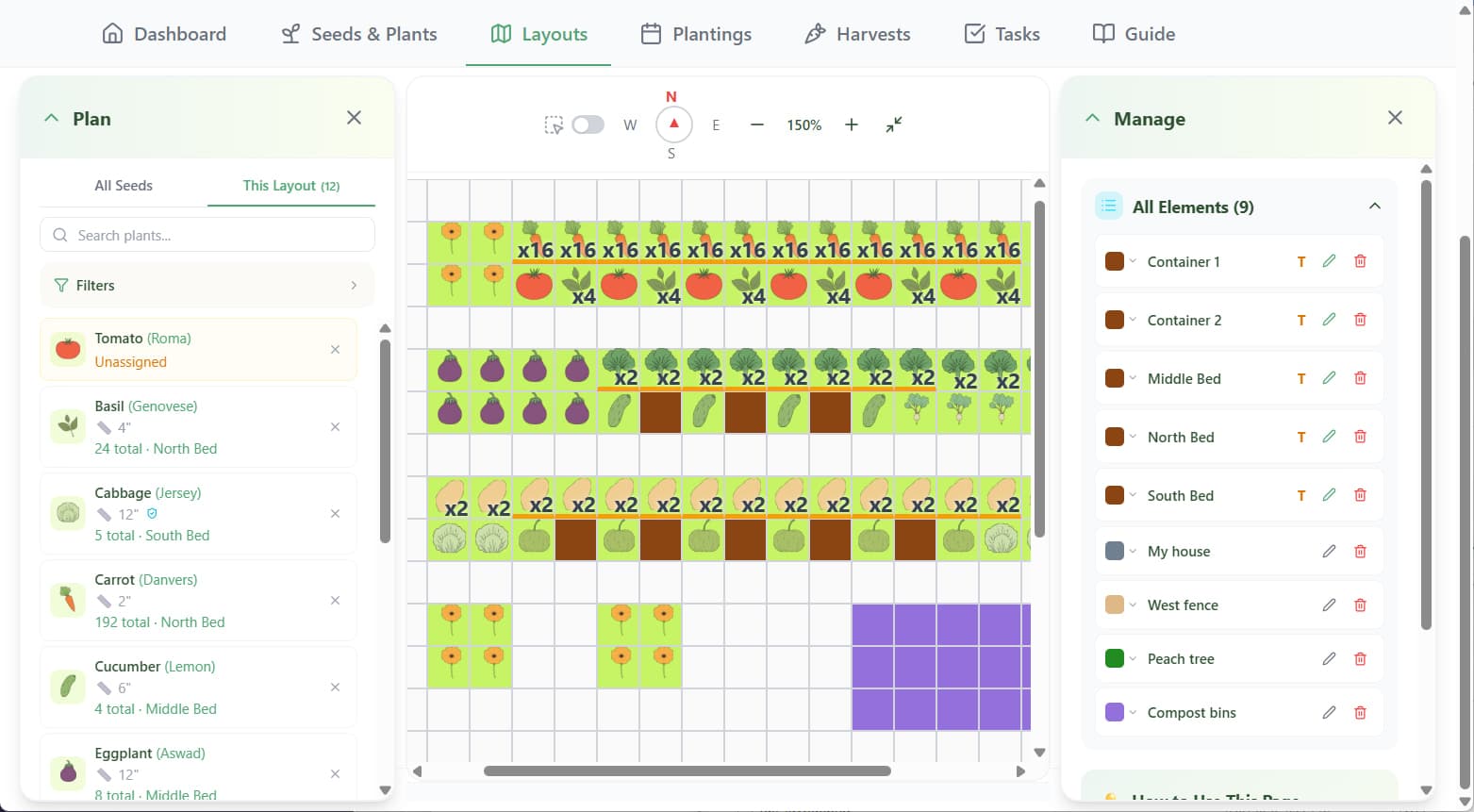
Most garden apps plan one bed at a time. Giddy Carrot's Layout Planner maps your whole space — and finally gives you a system for deciding what goes where.